
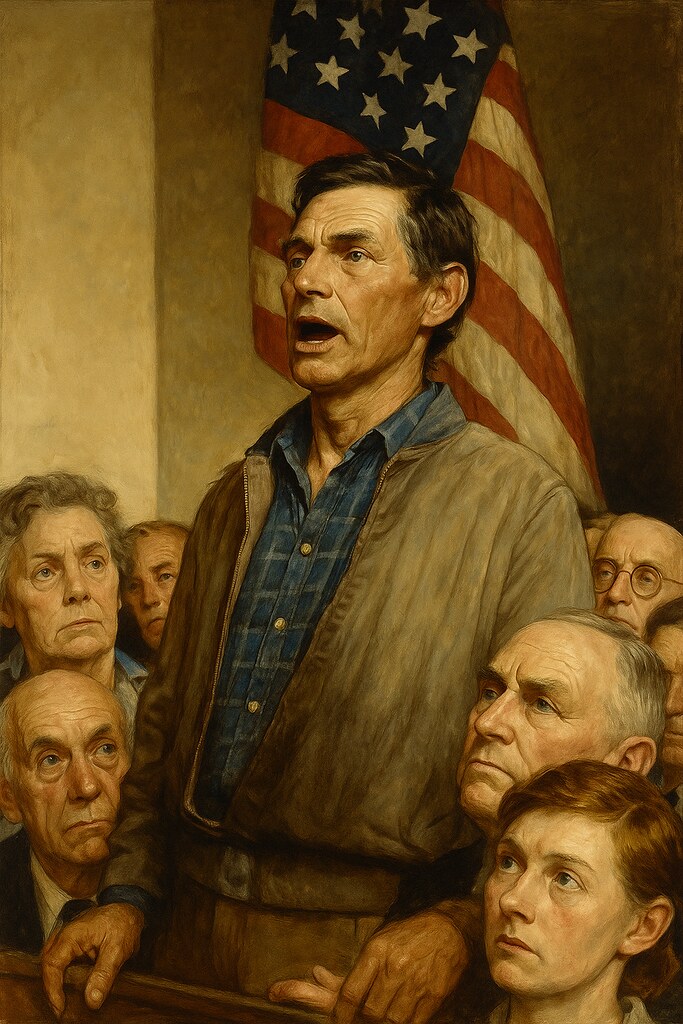
In the digital age, where anyone can share their thoughts and opinions in a moment’s notice, how do we determine who owns the content we share? This has been the center of conversation regarding social media for years, even reaching the supreme court to determine what is and isn’t protected speech. Do the things we share online count as speech of the user who posted it or is it an extension of the platform similar to how newspaper articles are ultimately owned by the newspaper instead of the article’s author.
We Need More “Public Squares”
In the real world, it is easy to identify the importance of public spaces for communities to gather and express their concerns. In fact, it’s hard to imagine what our world would be like without parks and other public spaces for people to gather. Online, most spaces we engage with are owned by powerful individuals, who choose who can access their platform and what content is available. Worst of all, if these spaces are shut down or we’re removed, all the content/data we’ve created isn’t guaranteed to be saved.
The difficulty in facilitating these public squares exist because, like public spaces in the real world, the cost to operate these spaces tend to outgrow the funds brought in. Of course offline we have the government to facilitate these spaces, right now we don’t have any similar spaces online. In fact, we can even experience real life consequences for actions taken in digital spaces that could be covered by free speech in alternative environments.
What Are Our Options?
The differences between online and offline spaces presents itself prominently when you consider how the “speech” is monitored and managed. When you have conversations in person the residual effect is limited to the area of the conversation. The nature of the internet means conversations online have multiple “touchpoints” before the parties involved can properly interact with it. As such, the importance of privacy is elevated and the control of that information becomes critical; Portability of your data is a sensible piece of the puzzle that is ownership of our speech.
It’s also crucial that we determine how to manage these spaces in a way that lowers the potential of human rights abuse. We do not want to enable people to traffic individuals or promote crime and we don’t want to infringe upon peoples free speech or provide private entities with too much power (either through excessive censorship or a lack of accountability). It’s a tough line to walk and one that, in my opinion, would benefit from the creation of government funded domains for public gathering and use.
This is an expense the government would be hesitant to embrace but one I feel would be necessary in the long run, coupled with legislation requiring enforcement of data portability. Most of the concerns we have regarding our data have barely been addressed until recently and the first step in resolving this is enforced access to this data. My most recent experience with the difficulty of a lack of portability occurred when I had to separate my Netflix account from my families plan due to household changes.
A small shift meant I’d have to either make a new profile (that was permanently attached to her account) or consistently request a 30 day ‘vacation’ access token. I even inquired about porting my history to my own account to no avail; my movie preferences is not my own.
Conclusion
Portability of the data we create is crucial for a functioning online space that enables and emboldens free speech. As users, it’s important that we understand that the things we create (or engage with) are not guaranteed to us. As long as we do not have ownership of or the ability to migrate the content we create we will continue to face censorship and limitation. I believe the government should embrace creating public spaces online that assist with ensuring we have gathering spaces but that is only possible when the people’s speech is considered and protected.
 Tea Time w/ T
Leave a comment